Custom plush toy manufacturing costs depend on materials, size, design complexity, order quantity, and quality control. However, the lowest price does not always mean the best value.
For toy brands, wholesalers, and retailers, consistent quality, accurate designs, and reliable production are essential. Poor workmanship or inconsistent quality can lead to additional costs and damage brand reputation.
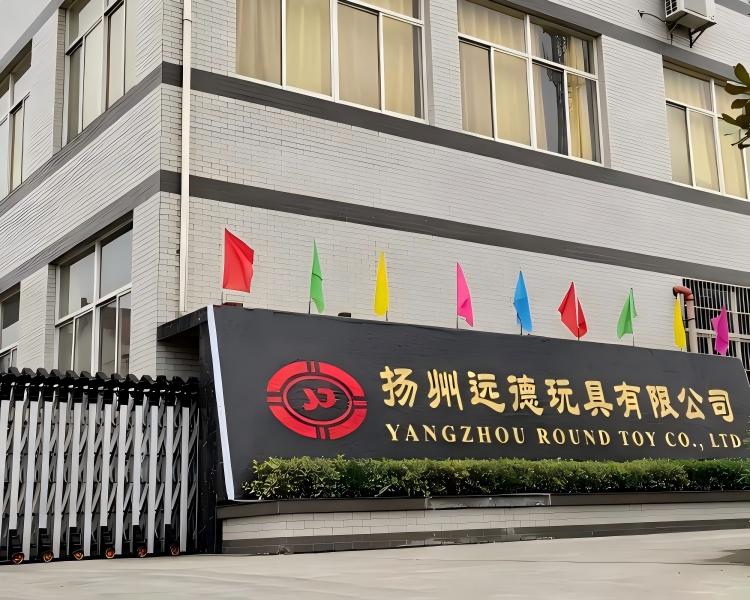
At Yangzhou Round Toy, we believe competitive manufacturing costs should go hand in hand with reliable product quality.
Established in 2000, Round Toy brings extensive plush toy manufacturing experience to custom product development, OEM/ODM production, and international wholesale orders. With a minimum order quantity (MOQ) starting from 500 pieces, we help businesses develop custom plush toys while balancing manufacturing efficiency, product quality, and budget requirements.
This guide explains what determines custom plush toy manufacturing costs, why supplier quotations differ, and how to achieve better purchasing value without compromising your brand's quality standards.
Table of Contents
Toggle
What Determines the Cost of Custom Plush Toy Manufacturing?
The price of a custom plush toy is influenced by several manufacturing factors. Understanding these factors helps buyers compare quotations more accurately and identify opportunities for cost optimization.
1. Fabric Materials and Filling Quality
Fabric selection directly affects both the production cost and finished appearance of a plush toy.
Common materials used in custom plush manufacturing include:
Short Plush: Suitable for many conventional stuffed animals and promotional plush products.
Velboa: A smooth, short-pile fabric commonly used for character toys and decorative plush products.
PV Plush: Offers a distinctive textured appearance for selected plush toy designs.
Faux Fur: Provides a fluffy finish for animal characters and specialty products.
Eco-Friendly Fabric Options: May be considered for brands with specific material or sustainability requirements.
Different fabrics have different prices, textures, durability characteristics, and processing requirements.
Filling materials also influence the softness, weight, and shape retention of the finished product.
For example, two plush toys may look almost identical in photographs but feel significantly different because of their fabric texture, stuffing density, and construction.
At Round Toy, we help customers evaluate material options based on product design, intended use, and budget. The objective is not simply to reduce material expenses, but to find a suitable balance between appearance, functionality, and manufacturing cost.
2. Design Complexity and Manufacturing Workmanship
The complexity of a custom plush toy determines how much development and manufacturing work is required.
A simple stuffed animal with a basic body shape generally requires fewer pattern pieces and sewing operations than a detailed character with multiple accessories.
Manufacturing costs may increase with:
Intricate body shapes and multiple fabric panels
Detailed facial embroidery
Customized clothing or removable accessories
Multiple fabric colors and textures
Specialized character proportions
Additional decorative or functional features
For brands developing original characters, design accuracy is especially important.
A poorly reproduced character may not reflect the artwork or brand identity, even when its manufacturing price is relatively low.
Round Toy supports design development and pattern refinement to help customers maintain recognizable character features while improving production practicality.
3. Sampling and Prototype Development
Before mass production begins, custom plush toy designs usually require a physical sample.
Prototype development helps evaluate:
Overall character appearance and proportions
Fabric colors and textures
Embroidery details
Sewing structure
Filling distribution
Accessories and branding elements
The number of sample revisions depends on the design and customer requirements.
A carefully reviewed prototype can help prevent expensive changes during bulk production.
Rather than rushing directly into manufacturing, Round Toy incorporates prototype development and sample approval into its custom production process.
This gives buyers an opportunity to review the product before committing to a full production order.
4. Order Quantity and Manufacturing Efficiency
Order volume plays an important role in plush toy pricing.
Certain expenses, including pattern development, production preparation, and manufacturing coordination, are distributed across the total order quantity.
As production quantities increase, manufacturers may achieve greater efficiency through material purchasing and repeated production operations.
At Round Toy, custom plush toy orders start from 500 pieces.
This MOQ provides a practical starting point for brands, wholesalers, and retailers looking to develop custom products through professional manufacturing processes.
Larger quantities may offer additional opportunities for cost optimization.
5. Quality Control and Product Requirements
Quality control also contributes to the total cost of manufacturing.
Inspection procedures require experienced personnel, production coordination, and time.
Depending on the product and destination market, additional safety testing and documentation may also be necessary.
However, these activities play an important role in reducing the risk of defective products and inconsistent manufacturing results.
For professional buyers, quality management should be considered part of the manufacturing value rather than an unnecessary expense.
How Does Order Quantity Affect Custom Plush Toy Pricing?
The relationship between order quantity and unit price is an important consideration for wholesale buyers.
At Round Toy, the MOQ for custom plush toy manufacturing starts from 500 pieces.
The following table explains how different order volumes can influence manufacturing efficiency.
Order Quantity
Production Characteristics
Cost Considerations
500 pieces
Starting MOQ for custom production
Setup and development expenses are distributed across 500 units
1,000 pieces
Larger production batch
Potential improvements in material purchasing and production efficiency
3,000 pieces
Higher-volume manufacturing
More opportunities to optimize repeated manufacturing operations
5,000+ pieces
Large-scale production
Greater potential for economies of scale, depending on specifications
These quantities illustrate manufacturing principles rather than fixed pricing tiers.
Final pricing depends on the toy's size, materials, construction, customization requirements, and packaging.
For example, a 20 cm plush character with simple embroidery will have a different cost structure from a 40 cm stuffed animal with multiple fabric components and customized clothing.
Round Toy's approach is to provide quotations based on actual product requirements, allowing customers to understand the relationship between design, quality, and manufacturing costs.
Custom Plush Toy Cost vs. Quality: What Is the Real Difference?
Not all custom plush toys are manufactured to the same specifications.
Two products may have similar appearances but differ significantly in material selection, stitching quality, design accuracy, and finishing.
Price alone cannot determine whether a manufacturer is reliable.
The following comparison highlights the factors buyers should evaluate when reviewing quotations.
Quality Factor
Cost-Focused Production
Quality-Focused Production
Fabric
Emphasis on material cost
Material selected to meet product requirements
Stitching
Basic construction requirements
Attention to seam consistency and workmanship
Embroidery
Simplified decorative details
Accuracy of embroidery placement and appearance
Filling
Cost-oriented filling decisions
Control of shape, softness, and filling distribution
Design Accuracy
Varies according to specifications
Reference to approved samples and design details
Quality Inspection
Scope varies by manufacturer
Inspection throughout key production stages
Packaging
Basic packaging requirements
Packaging designed around product protection and branding
Repeat Orders
Depends on retained specifications
Focus on maintaining established production requirements
The objective is not to suggest that inexpensive manufacturing always results in poor quality.
Instead, buyers should understand exactly what is included in each quotation.
A competitive price supported by appropriate materials, professional workmanship, and consistent manufacturing procedures can deliver greater overall value than a lower quotation with unclear specifications.
The Hidden Costs of Choosing the Lowest Plush Toy Manufacturing Quote
The initial unit price is only one part of the total purchasing cost.
A quotation that appears inexpensive may become less attractive if additional problems occur during production or after delivery.
Product Defects and Rework Costs
When finished products contain manufacturing defects, buyers may need to arrange additional inspections, sorting, repairs, or replacements.
These activities can increase the actual cost of the order.
Inconsistent Quality Across Bulk Orders
If the finished products differ noticeably from approved samples, some units may be unsuitable for retail sale or branded distribution.
This can affect inventory availability and lead to additional customer service expenses.
Production Delays and Delivery Disruptions
Manufacturing errors discovered late in the production process may require corrections.
For promotional campaigns, seasonal collections, or retail product launches, delivery timing is often an important commercial requirement.
Returns and Brand Reputation Risks
For branded products, quality problems can affect more than one order.
Customer complaints and negative product experiences may influence future purchasing decisions.
A brand may spend substantial resources on character development, marketing, and customer acquisition. Product quality should support these investments rather than undermine them.
Why Total Purchasing Cost Matters
Consider a simple illustrative example.
A buyer orders 1,000 custom plush toys and receives two quotations:
Cost Item
Supplier A
Supplier B
Unit price
$4.00
$4.30
Initial production cost
$4,000
$4,300
Assumed additional defect-related expenses
$450
$100
Total illustrative cost
$4,450
$4,400
Although Supplier A offers the lower initial price, the assumed additional expenses make its total cost higher.
This is a hypothetical purchasing scenario, not an actual Round Toy quotation or production-performance comparison.
The example illustrates why buyers should consider total purchasing value, including quality, reliability, and potential post-production costs.
How to Reduce Custom Plush Toy Costs Without Sacrificing Quality
Reducing custom plush toy manufacturing costs doesn't have to mean compromising quality. With the right design, materials, and production planning, buyers can achieve competitive pricing while maintaining consistent product standards.
Optimize Design Details
Simplify unnecessary accessories, fabric panels, or complex stitching while preserving the character's key features. This helps reduce labor and material costs without affecting the overall appearance.
Choose Cost-Effective Fabrics
Select fabrics based on product use, texture, durability, and budget. Round Toy helps customers identify suitable materials that balance quality and manufacturing costs.
Approve Samples Before Production
Confirm the size, colors, embroidery, filling, and accessories before mass production. Accurate sample approval helps prevent costly errors and rework.
Plan Your Order Quantity
Larger orders may reduce unit costs through improved production efficiency. With an MOQ starting from 500 pieces, Round Toy supports both growing brands and bulk wholesale buyers.
Evaluate Total Purchasing Costs
Consider sampling, packaging, testing, shipping, and import duties alongside the unit price. Comparing total costs helps buyers make more informed purchasing decisions.
Why Choose Round Toy for Quality-Focused Custom Plush Toy Manufacturing?
When developing custom plush toys for a brand, choosing the right manufacturer is a long-term business decision.
Buyers need more than competitive pricing. They need manufacturing experience, dependable communication, accurate product development, and consistent quality management.
Yangzhou Round Toy Co., Ltd. combines plush toy manufacturing experience dating back to 2000 with OEM/ODM customization services and a quality-focused production approach.
Our goal is to help brands create plush products that reflect their identities while maintaining practical manufacturing costs.
Manufacturing Experience Since 2000
Round Toy has been involved in plush toy manufacturing since 2000.
Our product range includes stuffed animals, teddy bears, plush keychains, pet plush toys, and other customized soft products.
This manufacturing background helps our team understand the technical considerations behind plush toy development, from pattern construction and fabric selection to embroidery, sewing, filling, and finishing.
For overseas customers, working with an experienced manufacturer can simplify the transition from a creative concept to a finished product.
Quality Control Throughout the Manufacturing Process
Quality is not determined only by the final appearance of a toy.
It depends on the manufacturing decisions and inspections carried out throughout production.
At Round Toy, our quality control approach covers several key stages:
Production Stage
Quality Focus
Material Inspection
Fabric appearance, selected materials, and agreed specifications
Sewing Inspection
Seam construction and workmanship
Embroidery Verification
Decorative details and placement
Filling Inspection
Shape, softness, and filling distribution
Appearance Check
Character proportions and visual consistency
Finished Product Inspection
Overall workmanship and product appearance
Packaging Verification
Packaging presentation and order requirements
These checks help our team identify manufacturing inconsistencies and maintain attention to approved product specifications.
We believe that dependable quality should be built into the manufacturing process, not left until the product is ready for shipment.
OEM Plush Toy Manufacturing for Original Brands
Original character development is an important part of building a distinctive toy brand.
Our team supports product development from the initial design review through sampling and mass production.
This allows brands to create differentiated products rather than relying exclusively on generic ready-made toys.
ODM Plush Toy Solutions for Product Development
Not every customer begins with a completed design.
Our ODM plush toy solutions support businesses that want to customize existing product concepts or develop new collections with manufacturing assistance.
Through design adaptation, material selection, branding options, and production support, we help customers develop products that match their commercial requirements.
Both OEM and ODM services reflect our commitment to combining practical manufacturing experience with customer-focused customization.
A Long-Term Manufacturing Partner for Global Buyers
For brands and distributors, a strong manufacturing partnership is built through clear communication, defined product specifications, and reliable production arrangements.
Round Toy supports international customers from design discussions and sampling through production, inspection, packaging, and shipment coordination.
We also recognize the importance of maintaining product specifications for repeat orders.
Our objective is to become a trusted manufacturing partner for businesses seeking consistent custom plush toy quality and sustainable long-term cooperation.
What Should Buyers Evaluate Before Placing a Bulk Plush Toy Order?
Before confirming a custom plush toy manufacturing order, buyers should evaluate several important areas.
Evaluation Area
Questions to Consider
Manufacturing Experience
Does the factory have relevant plush toy production experience?
Design Development
Can the manufacturer translate artwork into accurate samples?
Materials
Are fabrics, fillings, and accessories clearly specified?
Quality Control
What inspections are performed during production?
MOQ
Does the order meet the manufacturer's minimum quantity?
Design Consistency
Will bulk products follow the approved sample?
Communication
Can the supplier clearly explain manufacturing requirements?
Repeat Production
Can the manufacturer support future replenishment orders?
A reliable manufacturing partner should be able to discuss these topics clearly.
For buyers exploring different wholesale plush toy products, understanding both product specifications and manufacturing capabilities is an important first step toward successful sourcing.
Choose Round Toy: Quality Manufacturing That Supports Your Brand
The best custom plush toy manufacturing decision is not always the lowest quotation.
For brands, wholesalers, retailers, and importers, long-term value comes from the right balance of manufacturing cost, product quality, design accuracy, and production reliability.
A well-manufactured plush toy represents more than fabric and filling. It reflects the creativity, identity, and reputation of the brand behind it.
At Yangzhou Round Toy, we understand the responsibility that comes with manufacturing products for our customers' brands.
With plush toy manufacturing experience since 2000, professional OEM/ODM services, quality-focused production management, and an MOQ starting from 500 pieces, we help businesses develop custom plush products that meet their design and commercial objectives.
Your brand deserves more than a competitive price. It deserves a manufacturing partner that values quality as much as you do.
Start Your Custom Plush Toy Project With Round Toy
Custom Plush Toy Manufacturing | MOQ Starting from 500 Pieces
Looking for a reliable manufacturer for your next plush toy collection?
Share your character artwork, preferred size, materials, order quantity, and packaging requirements with our team.
Frequently Asked Questions About Custom Plush Toy Manufacturing Cost
How Much Does It Cost to Manufacture a Custom Plush Toy?
The cost depends on the toy's size, materials, design complexity, embroidery, filling, accessories, order quantity, and packaging requirements.
A manufacturer needs to review the actual product specifications before providing an accurate quotation.
What Is the Minimum Order Quantity for Custom Plush Toys at Round Toy?
The minimum order quantity for custom plush toys at Round Toy starts from 500 pieces.
We provide OEM and ODM manufacturing services for brands, retailers, wholesalers, and importers seeking customized plush toy production.
Does Ordering More Plush Toys Reduce the Unit Cost?
Larger order quantities can improve manufacturing efficiency and help distribute certain fixed production expenses across more products.
However, the final unit price also depends on materials, product complexity, and customization requirements.
Are Higher-Priced Plush Toys Always Better Quality?
No. Price alone does not determine product quality.
Buyers should compare materials, workmanship, design accuracy, product testing requirements, and manufacturing quality control procedures before making a decision.
How Can I Reduce Custom Plush Toy Production Costs?
You can improve cost efficiency by optimizing design details, selecting suitable materials, confirming accurate samples, planning appropriate order quantities, and working with an experienced manufacturer.
Can Round Toy Manufacture Plush Toys Based on My Original Design?
Yes. Round Toy provides OEM plush toy manufacturing for customers with original artwork, character designs, or product concepts.
Our team supports pattern development, material customization, sampling, and bulk manufacturing.
How Does Round Toy Maintain Consistent Quality in Bulk Orders?
Our quality management approach includes material inspection, sewing inspection, embroidery verification, filling inspection, appearance checks, finished-product inspection, and packaging verification.
These procedures help maintain attention to approved product specifications throughout manufacturing.
Does Round Toy Support International Wholesale Buyers?
Yes. Round Toy works with international customers and supports custom plush toy manufacturing, packaging, and shipment arrangements according to project requirements.