Selecting a newborn's first stuffed animal involves high stakes. Aesthetic appeal often masks hidden physical and chemical hazards on the retail shelf. The consumer market overflows with products marketed as soft or infant-friendly. Many of these fail rigorous safety thresholds. They risk choking, suffocation, or allergic reactions due to poor construction, toxic materials, and inappropriate sizing. We need a technical, evidence-based framework to evaluate these items. You must thoroughly inspect baby-safe plush toys before purchase. Focus on fabric integrity, internal filling, seam strength, physical dimensions, and regulatory age labels. This systematic approach ensures a zero-risk investment for the infant's environment.
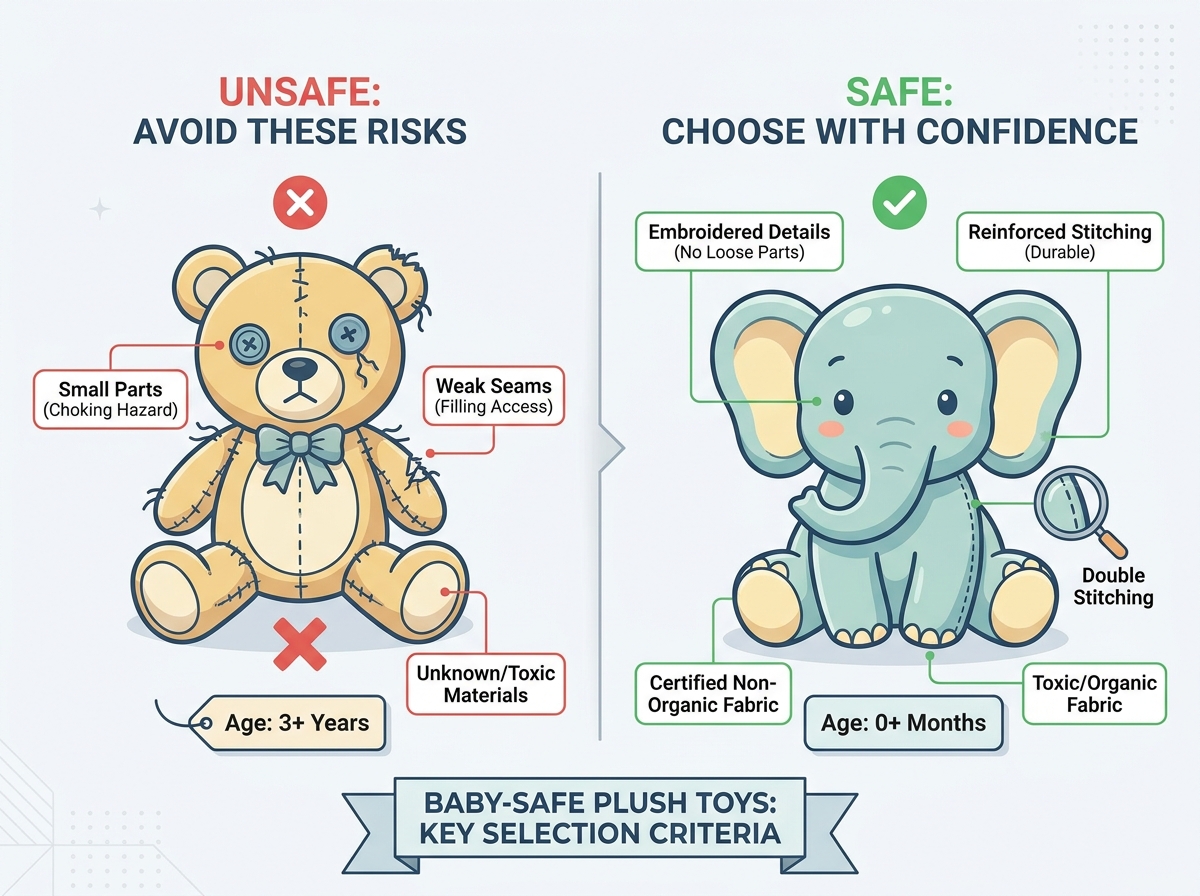
Prioritize Embroidered Details: Plastic "safety eyes" and buttons are inherent choking hazards for infants under 12 months; embroidered facial features are the only verifiable zero-risk option.
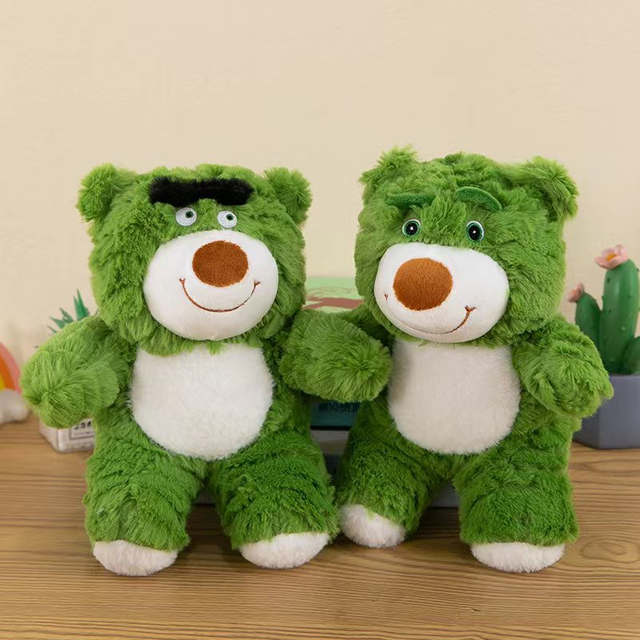
Avoid Long-Pile Fabrics: Faux fur and long-pile textiles pose ingestion and suffocation risks; opt for tight-weave, short-pile materials like organic cotton or hypoallergenic fleece to protect delicate skin.
Demand Structural Integrity: Safe plush toys require reinforced, double-stitched seams to contain internal stuffing and withstand rigorous pulling and frequent machine washing.
Factor in Size and Weight: Oversized or heavily weighted toys present severe suffocation and chest compression risks for infants lacking motor control.
Verify Age Labels: "Suitable from birth" (0+) is a specific regulatory standard, not a marketing term; toys lacking this explicit designation should be excluded from newborn consideration.
Table of Contents
Toggle
What Makes a Plush Toy Safe for Babies?
Establishing baseline requirements for infant safety requires moving far beyond subjective softness. Objective hazard prevention remains the primary goal. You must actively prevent choking, strangulation, toxicity, and suffocation. Infants interact with their environment primarily through mouthing. They possess a highly permeable skin barrier that absorbs surface chemicals rapidly. Furthermore, they lack the motor skills to remove airway obstructions if a toy covers their face. These physiological factors define the 0-12 months risk profile.
Regulatory standards provide a verifiable safety baseline. Marketing claims on packaging often mislead consumers with unregulated terms like "gentle" or "pure." Look for legitimate, third-party safety certifications. In the US, the ASTM F963 standard governs toy safety, dictating strict limits on heavy metals, flammability, and small parts. In Europe, the EN71 standard applies similar rigorous testing. These frameworks mandate physical and chemical evaluations in laboratory settings. OEKO-TEX Standard 100 certification is equally important for textiles. It verifies the complete absence of harmful chemicals, azo dyes, and heavy metals in the fabric. Toys lacking these specific certifications pose unacceptable risks to a developing immune system.
Understanding infant vulnerabilities guides proper selection on the shop floor. Newborns instinctively pull objects toward their faces and mouths. Loose fibers from cheap fabrics easily enter their respiratory tracts, causing micro-abrasions or blockages. Toxic dyes readily absorb through their thin skin during extended contact. Weak seams expose internal stuffing, which infants can quickly swallow. These hazards transform a simple comfort object into a severe danger. You must evaluate every single component through this strict, uncompromising safety lens.
We see many products fail basic compliance checks during manufacturing audits. A toy might pass a flammability test but fail a seam tension test. True baby-safe design requires holistic compliance. Every element, from the thread used in the embroidery to the ink printed on the care tag, must meet infant-specific safety thresholds. You cannot compromise on any single metric.
What Makes a Plush Toy Safe for Babies?
Physical dimensions directly impact infant safety and daily usability. Oversized plush toys pose a severe suffocation risk. Infants lack the neck strength to push heavy objects away from their faces. They cannot roll over to clear their airways if a large toy falls on them. A large stuffed animal can easily cover a baby's nose and mouth entirely. You must establish safe dimensional thresholds before buying. Select toys small enough for an infant to safely grasp with one hand. They must remain light enough to manipulate easily without fatigue.
Weighted toys introduce severe implementation risks in the nursery. Manufacturers often market them for anxiety relief or sensory integration. These products target older children or adults. You must strictly avoid them for infants under 12 months. Heavy toys cause dangerous chest compression. They significantly increase the risk of Sudden Infant Death Syndrome (SIDS) by restricting the infant's ability to breathe deeply. A safe infant toy should feel virtually weightless in your hands.
When evaluating dimensions, consider the crib environment. The American Academy of Pediatrics recommends a bare sleep environment. However, for supervised play, the toy must still adhere to strict size limits. A toy taller than eight inches often becomes unwieldy for a newborn. Width also matters. Bulky toys prevent the infant from wrapping their arms around the object, leading to frustration and potential drops onto their own face.
Dimension / Feature
Safe Threshold (0-12 Months)
Hazardous Threshold
Primary Risk Factor
Overall Height
Under 10 inches
Over 12 inches
Airway obstruction, suffocation
Total Weight
Under 0.5 lbs (225g)
Over 1 lb (450g)
Chest compression, SIDS
Graspable Width
1 to 2 inches (limbs)
Over 4 inches (solid body)
Inability to manipulate, facial impact
Shape Profile
Flat or contoured
Spherical or highly bulky
Rolling onto the face
Test the toy's weight distribution. Some toys have heavier bases to sit upright. This uneven weight distribution can cause the toy to tip over onto a reclining infant. Ensure the weight is evenly distributed throughout the body. The center of gravity should not favor the head or the base. This prevents accidental tipping during supervised floor play.
Best Fabrics for Baby-Safe Plush Toys
Outer fabrics determine skin safety, respiratory health, and long-term durability. Optimal materials include organic cotton, bamboo blends, and tight-weave microfiber fleece. These fabrics are naturally hypoallergenic and non-toxic. They remain highly breathable, preventing heat trapping against the infant's skin. They specifically protect a newborn's delicate epidermis from contact dermatitis and irritation. You must avoid long-pile faux fur entirely. Reject loosely knit yarns. Avoid chemically treated synthetics that shed microplastics and fibers.
Durability and washability are non-negotiable evaluation dimensions for any nursery item. Assess a fabric's resistance to stretching and pilling. It must resist color fading after repeated washing. High-temperature washing cycles eliminate dust mites. They destroy bacteria and remove accumulated allergens like pet dander or pollen. Machine-washability ensures the toy remains hygienic over months of use. Hand-wash-only toys accumulate dangerous pathogens over time because they cannot withstand the agitation and heat required for true sanitization.
Fabric density plays a major role in safety. We measure fabric weight in grams per square meter (GSM). A higher GSM in a tight weave means the fabric is less likely to tear or allow internal stuffing to migrate outward. Loose weaves, like those found in cheap crochet toys, allow infant fingers to become entrapped. This can cut off circulation to the digits. Always inspect the fabric surface for tight, uniform construction.
Implementation risks lurk in cheap synthetic fabrics imported without proper oversight. They often contain BPA, phthalates, and chemical flame retardants. These chemicals act as endocrine disruptors and can affect developmental milestones. Verify BPA-free and non-toxic claims through independent certifications. Do not trust unverified manufacturer descriptions on e-commerce platforms. Demand transparency regarding the exact fabric composition and dye processes used.
Rub the fabric vigorously against your dark clothing to check for shedding fibers.
Stretch the fabric gently to ensure it recovers its shape without exposing the backing.
Smell the fabric; a chemical or plastic odor indicates off-gassing of volatile organic compounds.
Check the care label for high-heat washing compatibility (at least 60°C/140°F).
Safe Fillings and Internal Parts for Baby Plush Toys
Internal stuffing requires careful evaluation because it dictates the toy's shape, washability, and safety profile if a seam breaches. Hypoallergenic fillings provide the safest approach. Recycled PET fiberfill offers excellent durability and loft retention. Organic cotton batting provides a natural, breathable alternative. Natural wool resists mold and dust mites naturally. These materials maintain their shape after aggressive washing. They do not emit harmful volatile organic compounds (VOCs) into the nursery air.
Choking hazards often hide inside the toy's body or limbs. Bean bags and plastic pellets create critical dangers. Weighted beads pose similar risks. Manufacturers use these to add weight or allow the toy to sit upright. If a seam fails, these small parts become immediate, fatal choking hazards. Infants quickly ingest small, loose items they find in their environment. You must completely avoid toys containing loose particulate fillings. Solid, continuous fiberfill remains the only acceptable standard for the 0-12 month age group.
Electronics and sound makers influence overall value and introduce new safety variables. Internal rattles or crinkle paper offer sensory stimulation for developing brains. However, they complicate the washing process. Many crinkle materials melt or degrade in high-heat dryers. Electronic sound boxes introduce battery hazards and heavy metal risks. Ensure battery compartments are screw-secured and require a tool to open. Evaluate how internal components impact the toy's washability. If you cannot wash the toy thoroughly because of a non-removable sound box, do not buy it.
Moisture retention in fillings causes hidden mold growth. Cotton batting takes longer to dry than synthetic PET fiberfill. If the toy remains damp inside after washing, black mold can develop within the stuffing. This releases spores that the infant inhales. Always ensure the toy can withstand tumble drying on a low or medium setting to completely eradicate internal moisture.
How to Check Plush Toy Stitching, Seams, and Details
Surface details dictate immediate choking risks and require visual inspection. Embroidered eyes and noses are an absolute necessity for this age group. You must avoid plastic components entirely. Standard safety eyes frequently fail under infant chewing pressure. The plastic backing washer snaps or warps, releasing the hard plastic eye. This creates a severe airway obstruction. Embroidery eliminates this risk completely by integrating the facial features directly into the fabric substrate.
Tensile strength ensures the toy remains intact during rough play. Physically evaluate seam integrity before handing the toy to a child. Look for double-stitched seams. Internally bound seams, where the fabric edges are folded and sewn twice, provide superior strength. The toy must withstand rigorous pulling. Weak threads expose the internal stuffing. This leads to ingestion and suffocation hazards. High-quality construction prevents these catastrophic failures.
In manufacturing, we use a pull test to verify seam strength. A clamp attaches to a limb, and a specific weight (often 15 pounds) is applied for a set duration. You can replicate a milder version of this at home. Grasp the main body of the toy in one hand and a limb in the other. Pull firmly. The seam should not stretch to reveal the stitching threads or the stuffing inside. If you see gaps forming, the thread tension is too loose, or the seam allowance is too narrow.
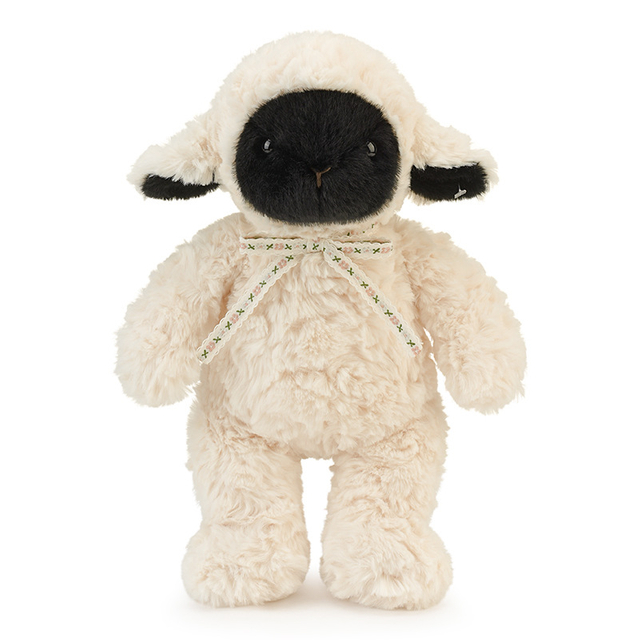
Implementation risks include loose appendages and accessories. Identify and avoid ribbons, bows, and neckties. Reject toys with removable clothing, hats, or small accessories. Ensure whiskers made of heavy thread or fishing line cannot detach. These items pose strangulation hazards if wrapped around a finger or neck, and choking hazards if swallowed.
Component
Safe Construction Method
Unsafe Construction Method
Eyes and Nose
Flat embroidery directly on fabric
Plastic safety eyes, buttons, glued felt
Main Body Seams
Double-stitched, internally bound
Single-stitched, visible thread gaps
Limbs and Ears
Integrated into main body seam
Tacked on externally with single thread
Accessories
Printed directly onto the fabric
Removable clothing, loose ribbons, bows
How to Read Plush Toy Age Labels and Safety Warnings
Age labels represent strict regulatory compliance, not just a suggestion. Understand the legal distinction between age grades. "Suitable from Birth" (0+ months) indicates the product passed rigorous safety testing for the most vulnerable demographic. It verifies the absence of small parts. It confirms high seam strength and non-toxic materials. "Recommended for 3+ Years" means the toy failed infant safety standards. Age grading relies entirely on hazard prevention, not developmental appropriateness or cognitive skill levels.
Identifying red flags prevents dangerous purchases. Spot contradictory product descriptions immediately. A toy marketed for nurseries but labeled "not for children under 3" is unsafe and legally non-compliant for infant use. Missing manufacturer contact information signals poor quality control and a lack of accountability. A lack of clear material disclosures on the tag is unacceptable. Legitimate manufacturers proudly display their safety certifications and provide full transparency regarding materials.
Always read the attached tags before removing them. Verify the washing instructions match the material claims. Cross-reference the safety standards listed (like ASTM or CE marks). If the tag lacks an explicit 0+ designation, exclude it from newborn consideration. Never assume a soft toy is automatically safe for an infant just because it looks harmless.
Counterfeit toys often feature fake CE marks or OEKO-TEX labels. Check the spacing and proportions of the CE logo; counterfeits often place the letters too close together. For OEKO-TEX, you can verify the certification number on their official website. Taking these extra verification steps ensures the product actually underwent the testing claimed on the packaging.
Conclusion
Structural integrity, non-toxic materials, and appropriate sizing must permanently outweigh aesthetic trends when outfitting a nursery. Verifiable safety certifications guarantee a secure environment for infants. Choosing safe plush toys requires diligence, physical inspection, and strict adherence to established safety standards. You must prioritize hazard prevention over visual appeal to protect the end user.
Established in 2000, Yangzhou Round Toy is an experienced Chinese manufacturer specializing in custom and wholesale plush toys, including baby toys, teddy bears, pet toys, plush keychains, pillows, and cushions. Supported by an approximately 8,000-square-meter facility, 200 skilled workers, 13 embroidery machines, and a monthly production capacity of around 200,000 pieces, the company provides flexible plush toy design and manufacturing services for global buyers.
Audit your current shopping cart and immediately remove any toys lacking a clear, verifiable 0+ age label.
Request material safety data sheets or OEKO-TEX certification numbers from retailers before finalizing a purchase.
Perform a manual pull test on all seams, ears, and appendages immediately upon receiving the toy.
Wash the plush toy on a high-heat cycle to remove manufacturing residues before giving it to the infant.
FAQ
Q: Are plastic safety eyes safe for newborns and infants?
A: No. Plastic safety eyes are not recommended for children under 3 years old. The internal backing washer can warp or fail under the repetitive pressure of an infant's chewing. This releases the hard plastic eye, creating an immediate and severe choking hazard. Always choose toys with 100% embroidered facial features.
Q: Why are long-pile fabrics not recommended for babies under 12 months?
A: Long-pile fabrics and faux fur shed loose fibers easily due to their loose weave structure. Infants constantly mouth their toys. They can inhale or ingest these loose fibers, leading to respiratory irritation, gagging, or potential suffocation. Short-pile, tight-weave fabrics prevent this shedding.
Q: What is the safest size and weight for a baby plush toy?
A: The safest toy is lightweight (under 0.5 lbs) and small enough for the infant to grasp easily with one hand. Oversized or weighted toys pose severe suffocation and chest compression risks. Infants lack the motor control and neck strength to push heavy objects away from their faces.
Q: What is the best fabric for stuffed toys for babies?
A: Organic cotton, bamboo blends, and tight-weave microfiber fleece are the best options. These materials are naturally hypoallergenic, highly breathable, and protect delicate skin. They withstand frequent high-heat washing without pilling or fading, ensuring long-term hygiene and structural durability.
Q: How often should I wash a baby's plush toy?
A: Wash the toy weekly or immediately after it becomes soiled. Frequent washing eliminates dust mites, bacteria, and accumulated allergens. Ensure you select toys made from durable materials that can withstand high-heat laundering and tumble drying without losing structural integrity or shedding fibers.
Q: Are BPA-free and organic labels necessary for plush toys?
A: Yes. Infants inevitably put toys in their mouths and press them against their skin for extended periods. Avoiding endocrine disruptors like BPA, phthalates, and toxic azo dyes is critical for their health. Organic and OEKO-TEX labels verify the absence of these harmful chemicals.
Q: How can I test the stitching on a stuffed animal before giving it to a baby?
A: Perform a manual pull test. Firmly tug on the limbs, ears, and main body seams. Inspect the stitching for any visible gaps, stretching, or weak threads. If you can see the internal stuffing or if the seam yields under moderate pressure, the toy is unsafe.