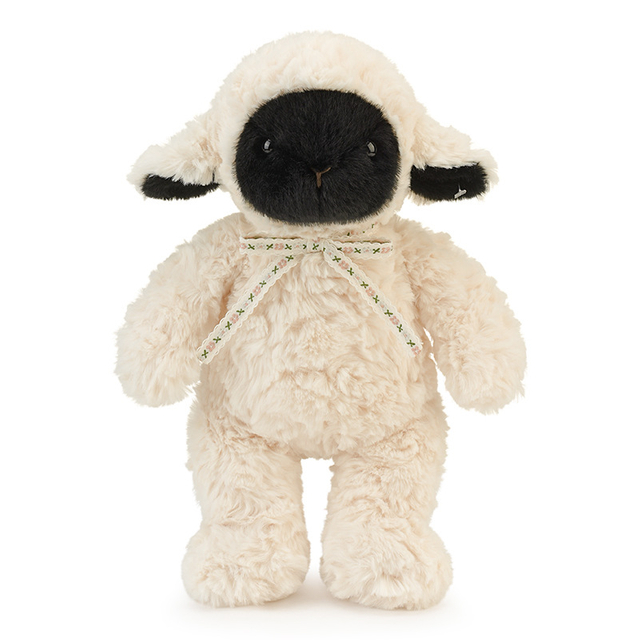
Valentine’s Day represents a critical, short-window revenue opportunity for retailers, with plush gifting remaining a consistently high-performing category across multiple demographics. Retail buyers face the challenge of inventory saturation with generic products. Overstocking low-quality or undifferentiated plush leads to aggressive post-holiday markdowns, eroding Q1 profit margins. To maximize sell-through rates and protect margins, retailers must strategically evaluate their mix of Valentine’s Day plush toys.
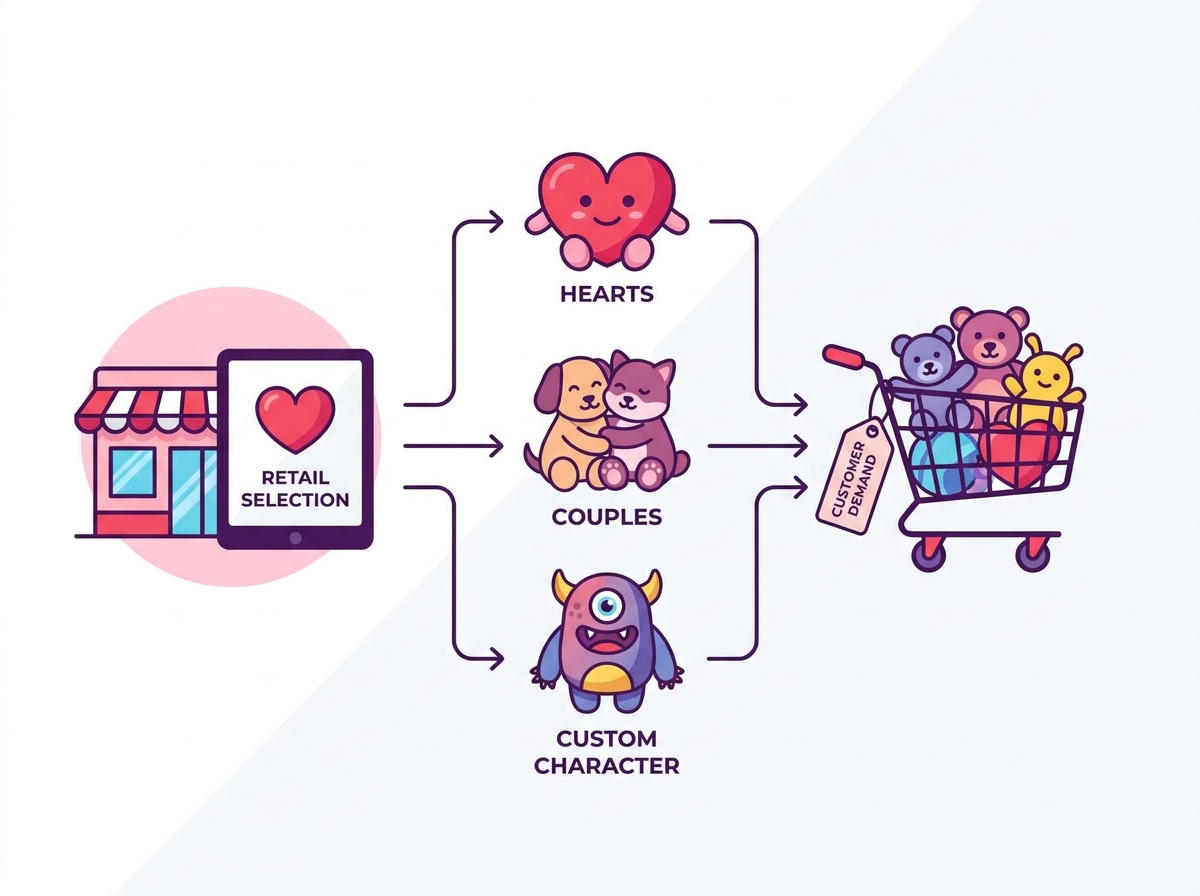
This guide breaks down the sourcing criteria for heart-themed classics, couple-oriented sets, and custom character designs based on demographic appeal, compliance, and unit economics. We outline how to build a profitable inventory mix, navigate custom manufacturing trade-offs, ensure safety compliance, and implement merchandising strategies that drive higher average order values without relying on heavy discounts.
Demographic Alignment Dictates Sourcing: The most profitable inventory mix segments products strictly by end-user—traditional plush for children, matching sets for couples, and trend-driven or humorous designs for young adults.
Custom vs. Off-the-Shelf Trade-offs: Custom plush toys offer higher margins and brand exclusivity but require 90-120 day lead times and strict MOQ (Minimum Order Quantity) commitments.
Compliance is Non-Negotiable: All imported plush inventory must possess verifiable safety certifications (e.g., ASTM F963, CPSIA, or EN71) to mitigate liability and retail rejection risks.
Merchandising Multiplies Value: The highest ROI on Valentine’s Day plush toys comes from cross-merchandising and bundling with high-margin perishables, date-night experiences, and complementary gifts.
Table of Contents
Toggle
How to Build a Profitable Valentine’s Day Plush Toy Assortment
Establishing baseline metrics for a successful Valentine’s Day plush program requires focusing on sell-through velocity, average order value (AOV) contribution, and minimizing dead stock by February 15th. Retailers need a clear understanding of who is buying the product and what product tier they expect. You cannot treat all plush inventory as a monolith. A successful program segments the inventory based on strict performance indicators.
Sell-through velocity must be monitored daily starting in late January. If a specific plush design is not moving by February 5th, merchandising adjustments are required immediately. Waiting until February 14th guarantees dead stock. You must track the contribution margin of each plush category to understand which items actually drive profitability versus which items merely take up shelf space.
Performance Metric
Target Benchmark
Action if Underperforming
Sell-Through Rate (by Feb 13)
85% or higher
Relocate to high-traffic endcaps immediately.
Average Order Value Contribution
Multi-item basket inclusion
Implement cross-merchandising with perishables.
Dead Stock Volume (Post-Feb 15)
Under 5% of total buy
Shift future buys toward evergreen designs.
Analyzing Target Demographics and Pricing Tiers
Different buyer segments demand distinct product characteristics. Sourcing the wrong product for your primary demographic leads to stagnant inventory. You must align fabric choices, design complexity, and safety features with the end-user.
Children and Family: High volume impulse purchases. This category requires strict safety compliance, highly durable materials, and recognizable animal shapes. Parents look for items that can withstand rough handling and frequent washing. Avoid small detachable parts.
Couples and Romantic Partners: Mid-to-high tier expectations. Focus on aesthetic quality, emotional durability, and premium textures. These buyers seek keepsake value. The plush must solve specific gifting challenges, often serving as a standalone gift or the centerpiece of a larger gift basket.
Galentine's and Alternative Gifting: Trend-driven mid-tier expectations. Focus on niche designs like cryptids, food-shaped plush, or anti-Valentine themes. This segment appeals heavily to Gen Z and millennial buyers who reject traditional romantic tropes in favor of humor and shared internet culture.
Best Valentine’s Day Plush Toy Categories for Retailers
Selecting the right product categories ensures you meet diverse customer expectations while managing inventory risk. A balanced assortment prevents over-reliance on a single trend while capturing multiple buyer intents.
Classic Heart-Holding Plushies and Functional Variants
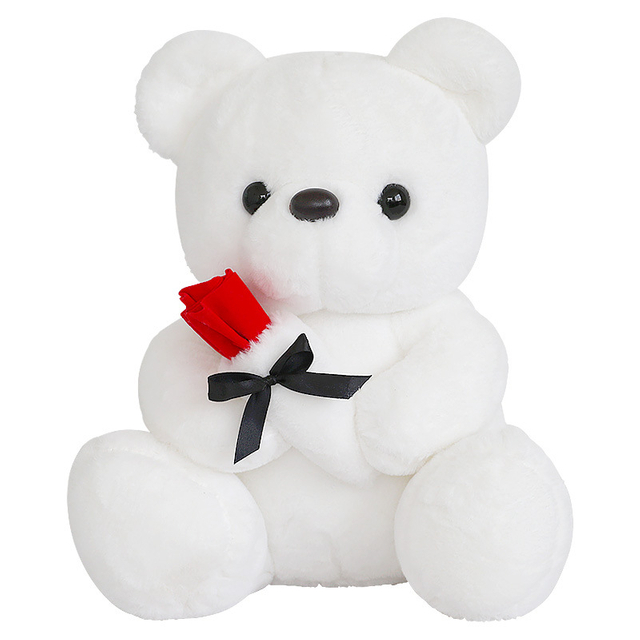
Familiar, universally recognized designs like bears, dogs, and lions holding hearts drive reliable impulse purchases. Functional formats, such as oversized heart pillows, also perform consistently well. However, these items carry a high risk of commoditization. If your product looks identical to the inventory at a deep-discount competitor, you will lose the sale.
To maintain margins, evaluate the physical construction of the plush. Check the quality of the embroidery on the heart. Assess the pile density of the fabric; sparse fur that reveals the backing material looks cheap and deters buyers. Check the stuffing consistency to ensure the plush sits upright without slumping. Consider incorporating trending material variations, such as crochet, corduroy, or knit textures, to differentiate your offerings from standard discount store alternatives.
Couple-Themed and Matching Sets
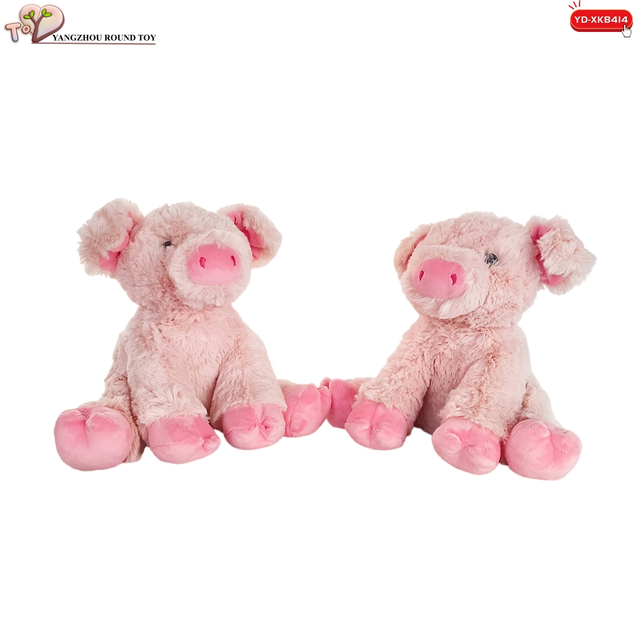
Interlocking designs, magnetic hands, or complementary characters increase the unit per transaction (UPT) by combining sentiment with displayability. Examples include two halves of a heart, or paired food items like peanut butter and jelly. These sets encourage buyers to purchase multiple items simultaneously.
When analyzing the adult gifting market, recognize that these items require premium packaging. Sophisticated branding and sturdy display boxes justify higher retail positioning. The goal is to position the product as a lasting memory rather than a disposable novelty. The fabric should feel luxurious, utilizing materials like high-GSM minky or sherpa.
Niche and Non-Traditional Designs
Unique shapes, including ocean animals, botanical plush, and whimsical cryptid companions, capture buyers experiencing fatigue with traditional red-and-pink teddy bears. A plush succulent or a Valentine-themed mothman stands out on a crowded retail shelf.
You must assess trend longevity carefully. These items carry a higher risk of remaining unsold if the specific trend fades before the holiday. Precise volume forecasting is mandatory. Do not commit your entire open-to-buy budget to a hyper-specific internet meme unless you have historical data proving your customer base converts on those trends.
Best Valentine’s Day Plush Toy Categories for Retailers
Deciding between custom designs and wholesale catalogs involves weighing immediate availability against exclusive market positioning. Custom manufacturing requires more upfront work but offers significant long-term advantages for retailers looking to build brand equity.
Brand Differentiation vs. Off-the-Shelf Sourcing
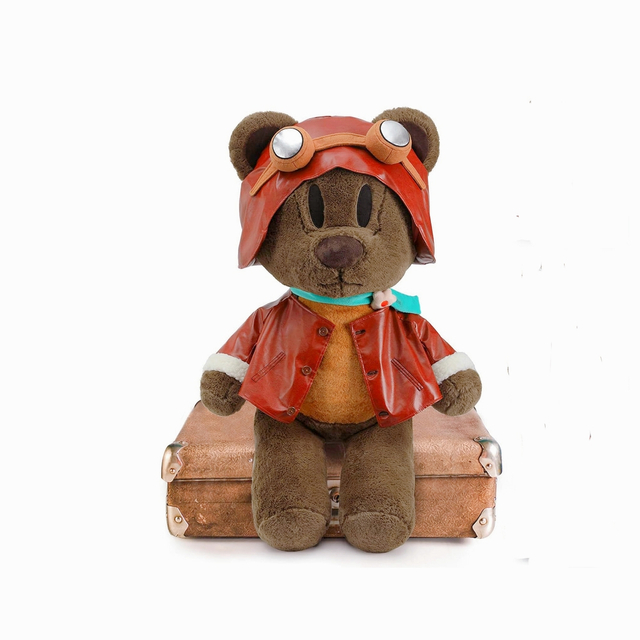
Custom proprietary designs offer significant brand differentiation. When you own the design, competitors cannot undercut you with the exact same product. This protects against direct price comparisons on third-party marketplaces. Off-the-shelf sourcing from wholesale catalogs provides immediate availability for tight sourcing windows, but you sacrifice exclusivity.
If your retail brand has a mascot or a specific aesthetic, translating that into a custom plush creates a unique destination item. Customers must visit your store to purchase it. This drives foot traffic and builds customer loyalty.
MOQ and Lead Time Realities
Standard MOQs for custom plush typically range from 500 to 1,000 units per design. You cannot order custom plush at the last minute. The supply chain requires strict adherence to a production calendar.
Concept and Tech Pack (Q3): Finalize character turnarounds, Pantone colors, and fabric specifications.
Prototyping (15-30 Days): The factory creates the initial sample. Expect at least one round of revisions to correct proportions or embroidery details.
Mass Production (30-45 Days): Once the golden sample is approved, bulk manufacturing begins.
Testing and Compliance (10-14 Days): Third-party labs conduct pull tests, flammability tests, and chemical screening.
Ocean Freight and Customs (30-45 Days): Transit time from overseas factories to your distribution center.
Cost-to-Margin Analysis
Break down the upfront costs, including prototyping fees and molds, versus the long-term margin benefits. Owning the IP allows for higher retail markups. You control the perceived value of the item. While the initial cash outlay is higher than buying from a domestic wholesaler, the landed cost per unit on a custom run is often significantly lower, allowing for a much healthier gross margin.
How to Choose a Reliable Plush Toy Supplier
Proper supplier evaluation protects your business from liability and ensures product quality. You cannot rely on a factory's word; you must verify their capabilities and compliance records independently.
Safety Compliance and Certifications
Understand the specific regulatory frameworks required for plush toys. In the United States, products must comply with CPSIA regulations and pass ASTM F963 testing. In Europe, EN71 standards apply. These tests check for heavy metals in dyes, flammability of fabrics, and the physical integrity of the toy.
Always verify third-party lab testing reports from suppliers. Do not accept in-house factory reports. Look for documentation from recognized testing facilities. If a supplier hesitates to provide recent, verifiable test reports for their materials, find another supplier. Retail rejection risks and product liability claims will destroy your business faster than a missed sales window.
Material Quality and Durability Standards
Instruct buyers to evaluate fabric GSM (Grams per Square Meter) during the sample review process. A higher GSM indicates a denser, more durable fabric. Standard plush might use 200-250 GSM, while premium keepsake items should utilize 350 GSM or higher.
Test seam strength rigorously. Pull on the limbs and ears of the sample. Inspect the safety of hard components like plastic eyes and noses. They must be securely fastened with internal washers that cannot be pulled through the fabric. For items targeted at children under three, embroidered features are always safer than plastic components.
Bulk Pricing Tiers and Shipping Logistics
Analyze how freight costs impact the final landed cost per unit. Plush toys are lightweight but bulky. You pay for volumetric weight (CBM), not actual weight. Shipping air-filled boxes destroys your margins.
Discuss strategies like vacuum sealing with your supplier. Vacuum sealing compresses the plush, allowing you to fit significantly more units into a shipping carton. However, you must manage the associated risks. Test a vacuum-sealed sample to ensure the fabric does not permanently wrinkle and the stuffing recovers its original shape within 24 hours of opening.
Shipping Method
Transit Time
Cost Impact
Best Use Case
Ocean Freight (FCL)
30-45 Days
Lowest per unit
High volume, planned inventory
Ocean Freight (LCL)
35-50 Days
Moderate per unit
Mid-volume, shared containers
Air Freight
5-10 Days
Highest per unit
Emergency restocks only
How to Sell More Valentine’s Day Plush Toys
Effective merchandising maximizes the return on your plush inventory. How you present the product on the floor dictates how quickly it sells. Plush should never be shoved onto a bottom shelf.
Bundling for Increased AOV
Pair plush with complementary categories to increase average order value. Do not force the customer to hunt through the store to build a gift. Create pre-made gift baskets that include a plush toy, floral add-ons, and premium chocolates. Curate date-night bundles that pair plush toys with experience-based presents, such as restaurant gift cards or movie tickets.
Bundling obscures the individual item cost, allowing you to achieve a higher overall margin on the combined package. It also provides convenience for last-minute shoppers who are willing to pay a premium for a complete, ready-to-give solution.
Display Tactics to Drive Impulse Purchases
Utilize optimal retail placement strategies. Endcaps facing high-traffic aisles are prime real estate for Valentine's Day plush. Use point-of-sale (POS) bins near the registers for smaller, impulse-sized items. Cross-departmental integration is highly effective; place small plush items in the greeting card aisle or near the floral department.
Ensure displays are fully stocked and visually appealing. A half-empty bin looks picked over and discourages purchases. Use color blocking—grouping all red items, all pink items, and all white items together—to create a striking visual impact that draws the customer's eye from across the store.
Mitigating Post-Holiday Markdown Risks
Select evergreen plush designs that can be sold year-round. Avoid dates or specific holiday text on the product itself. A bear holding a plain red heart can be sold for anniversaries or birthdays in May. A bear with "Valentine's Day 2024" embroidered on its chest becomes dead stock on February 15th.
If you must carry holiday-specific items, forecast those volumes conservatively. Plan your markdown strategy in advance. Move remaining holiday-specific inventory to a consolidated clearance section immediately on February 15th to free up floor space for incoming spring merchandise.
Conclusion
To optimize your Valentine's Day plush strategy, take the following steps:
Segment your inventory based on target demographics to ensure relevant product offerings and appropriate material selection.
Verify all supplier safety certifications, including ASTM F963 and EN71, before finalizing bulk manufacturing orders.
Implement cross-merchandising strategies to bundle plush with higher-margin items like chocolates and greeting cards.
Forecast volume carefully for niche designs and prioritize evergreen styles to avoid post-holiday dead stock.
For retailers and brands seeking a more distinctive product assortment, Yangzhou Round Toy has specialized in plush toy manufacturing since 2000, supporting custom designs, wholesale orders, OEM and ODM production for international customers. Backed by an approximately 8,000-square-meter factory, skilled production personnel, embroidery equipment, and needle-inspection capabilities, the company helps buyers develop plush products in different shapes, sizes, materials, and levels of complexity.
FAQ
Q: What is the typical MOQ for custom Valentine's Day plush toys?
A: Standard Minimum Order Quantities (MOQs) for custom plush toys generally range from 500 to 1,000 units per design. This depends heavily on the manufacturer's capabilities, the complexity of the character, and the specific fabrics required for production.
Q: How early should I order custom plush for Valentine's Day?
A: You should initiate orders by Q3 of the preceding year. This timeline allows 90 to 120 days to complete prototyping, mass manufacturing, third-party safety testing, and ocean freight transit before the holiday merchandising window opens.
Q: What safety certifications are required for plush toys in the US?
A: Plush toys imported into the United States must comply with CPSIA regulations and meet ASTM F963 safety standards. These tests ensure the product is free from heavy metals, meets flammability requirements, and passes physical pull tests.
Q: How can I reduce shipping costs for bulk plush orders?
A: Vacuum sealing significantly reduces the volumetric weight (CBM) of plush toys, lowering ocean freight costs. You must test a sample first to ensure the specific fabric and stuffing will fully recover its shape without permanent wrinkling.
Q: What are evergreen plush designs?
A: Evergreen designs are plush toys manufactured without specific holiday text, years, or hyper-seasonal branding. This allows the inventory to remain on the sales floor for birthdays and anniversaries, drastically reducing post-holiday markdown risks.